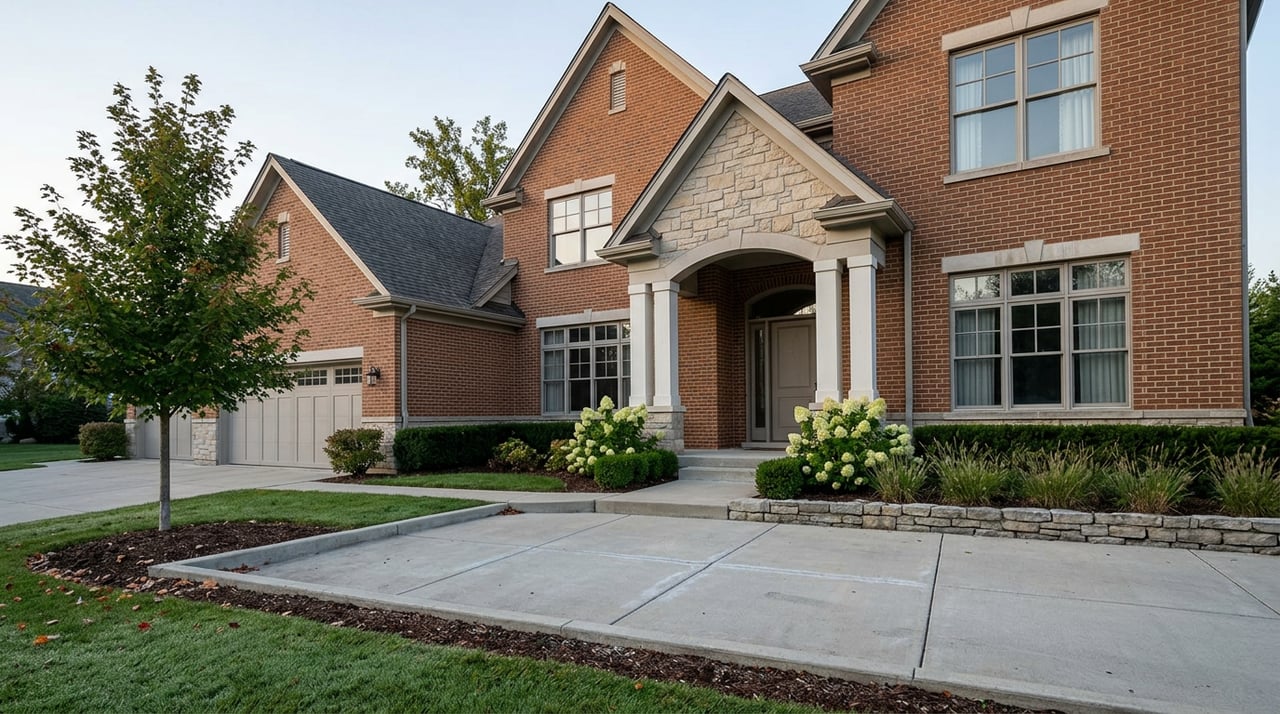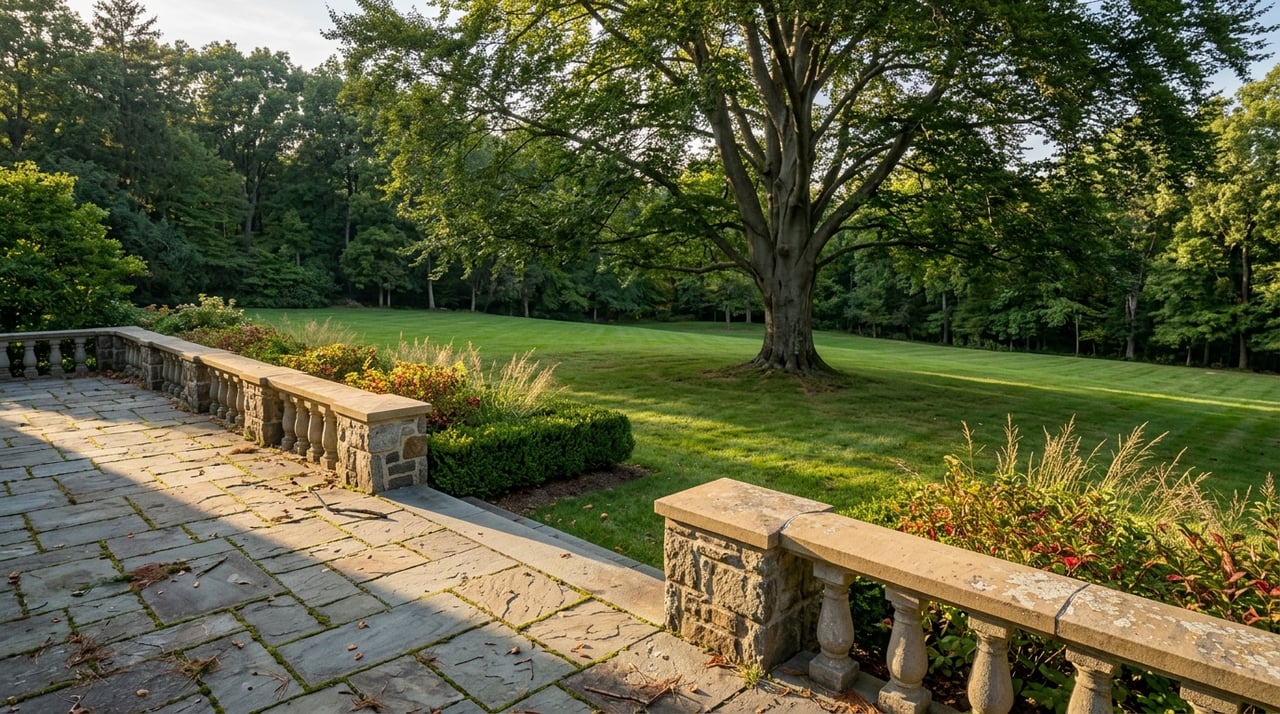
Drive through Inverness on any August evening and you will pass horse fencing, mature oak canopies, curving roads with no sidewalks, and long gaps between mailboxes. What you will not pass is a strip mall, a coffee shop row, or anything resembling a Main Street. That is not an oversight. The village sits about 29 miles northwest of downtown Chicago on residential lots that typically run at least an acre, and in nearly a century of existence it has allowed exactly one place to be zoned for business: Williamsburg Village, which opened in 1981, decades after the first houses went up.
That single fact explains more about how people in Inverness actually spend a Saturday than any generic list of "things to do" ever could. If you already live here, you have felt the effect without naming it. The village outsources its social infrastructure. You do not walk to dinner. You do not bump into a farmers market downtown. Instead, the calendar runs through a handful of institutions that sit just outside the village line, plus a small set of private clubs that have quietly outlasted every commercial trend since the 1940s.
The Founder's Math
The land that became Inverness was assembled by Arthur T. McIntosh, one of Chicago's major land developers of the era, who bought the old Temple farm along with the Cudahy Company golf course and ten other parcels, eventually controlling 1,500 contiguous acres. He named the development after his own family's clan home in Scotland. His stated goal was not density or convenience. It was a place for young families to live in a country-like atmosphere within reach of the city.
The person who actually drew the roads was a land agent named Way Thompson, and the decision he made still shapes every drive through the village. Rather than lay a grid, he ran the streets to follow the rolling terrain and split the lots to match the land's natural contours. That choice is why there is no efficient way to walk from one cluster of homes to another, and why a shopping strip never made commercial sense the way it would in a gridded suburb next door. Construction paused during World War II, then picked back up in the postwar years with the McIntosh Company still controlling nearly every lot sale and resale.
By the time the village had grown into the 1970s and 80s, homes had gotten larger, styles more varied, and Inverness had annexed existing pockets of unincorporated Cook County to the west. Williamsburg Village arrived in 1981 as the sole answer to a question most suburbs solve early: where do residents actually shop. Inverness answered it once, then stopped.
The Clubs That Outlasted Every Storefront
The earliest gathering spot in the community was not retail at all. It was the Inverness Golf Club, which by 1939 served as the center of recreation for the young village. By 1951 the original clubhouse had aged out, and the McIntosh Company financed a replacement. Membership dues climbed from $150 to $250 plus a 20 percent tax, and the club capped itself at 200 members.
That same decade produced the four organizations that still structure social life in Inverness today. The Garden Club formed in 1940 at a property known as the Four Silos. Twenty founding families started the Inverness Association in 1944, charging a dollar a year in dues. The Inverness Book Club followed in 1954. The Women's Club of Inverness organized in September 1965. All four are still active.
Compare that timeline to any retail concept that has opened and closed nearby in the same stretch of decades. The clubs are the actual constant. A restaurant or shopping plaza can vanish inside a business cycle. A garden club founded in 1940 does not need foot traffic to survive.
Where Dinner Actually Happens
Because Williamsburg Village covers a narrow slice of what a downtown would normally provide, dinner in Inverness usually means a five to ten minute drive to a restaurant that is technically somewhere else. A few specific spots have become part of the regular rotation for people who live here:
- Osteria Trulli, right at the edge of the village, serves orecchiette with house sausage and rapini alongside wood-fired pizza, close enough that it functions as a genuine Inverness dinner option rather than a special-occasion drive.
- Saganaki, on Roselle Road, is the go-to for grilled octopus and lamb chops when the plan calls for something more Mediterranean.
- Molino's, just east in Palatine, covers the sweeter end of the rotation with tres leches cake and conchas, and its artisan breads show up at more than a few park picnics.
- Plum Garden, south of Palatine Road, handles the Chinese-American staples, with a seafood sizzling rice soup that has a loyal following on colder nights.
None of these sit inside Inverness proper except Osteria Trulli, and even that one is at the literal border. The rest of the rotation confirms the same pattern that shows up everywhere else in the village's history. The commercial life happens adjacent to Inverness, not inside it.
The Trail That's Older Than the Village Itself
The other half of the weekend routine runs through Deer Grove Forest Preserve in neighboring Palatine, which the Forest Preserves of Cook County acquired in 1916. That makes it older than Inverness's own founding, and it has grown since then to roughly 1,800 acres including a sledding hill, a model airplane field, Deer Grove Lake, and the recently revitalized Camp Reinberg campground.
The preserve splits into two halves with genuinely different characters, which matters if you are deciding what kind of afternoon you actually want:
| Section | Surface | Distance | What it feels like |
|---|---|---|---|
| East Loop | Paved | 2.8 miles, connecting to a 1.2-mile segment | Open wetlands, restored savanna and prairie, flat and easy |
| West Loop (Yellow and Brown combined) | Unpaved | Roughly 6 miles | Dense woods, ravines, rolling terrain, more solitude |
Restaurant options sit east along Dundee Road within a couple of miles of the west entrance, which is part of why a Deer Grove afternoon so often folds directly into one of the dinners listed above. Access points run through Quentin Road and Pepper Tree Drive off Dundee Road, and by mid-August the crowds that fill the east loop's picnic shelters on holiday weekends have thinned out, which makes this the better stretch of the calendar for the quieter west side.
The Concerts Already Ended, and That's the Point
Here is where a lot of generic guides get Inverness wrong this time of year. The Inverness Park District runs a free summer concert series, and in 2026 it consisted of exactly two dates: the Oh Yes Band on July 15, covering Bon Jovi, Journey, Taylor Swift, and Bryan Adams, and the Ethan Bell Band on August 5, covering Morgan Wallen, Zach Bryan, and Tyler Childers. As of today, both have already happened. Any post recommending you catch a Park District concert this month is working from stale information, not current knowledge of the village calendar.
What that means practically is that the back half of August and into September is not concert season in Inverness. It is trail season, dinner-rotation season, and the stretch where the four historic clubs start planning their fall programming. If you are looking for what is actually happening right now, it is less about a stage and more about a quieter set of routines that do not depend on an event calendar at all.
A Weekend That Looks Like This Right Now
- Morning: the west loop at Deer Grove, starting from the Quentin Road entrance, while the temperature is still cool enough for the six-mile combined Yellow and Brown loop.
- Midday: a stop at Camp Reinberg for water and a break before heading back through the east side wetlands if you want the flatter, paved return.
- Evening: dinner at Osteria Trulli or a short drive to Saganaki, depending on whether the mood calls for wood-fired pizza or grilled octopus.
- Later in the week: check in with whichever of the four clubs, Garden Club, Book Club, Women's Club, or the Inverness Association, has something on the fall calendar, since that is where the actual community planning happens once the concert season has closed.
None of this requires a downtown. It never has. The village was built that way on purpose, and eight decades later the pattern still holds.
If you are thinking about what a home in a place like this is actually worth, or how a property here should be presented to reflect the way people really live in it, the Tara Kelleher Team knows this village down to its trail entrances and its dinner rotation. Get your home valuation and staging plan whenever you are ready to talk specifics.