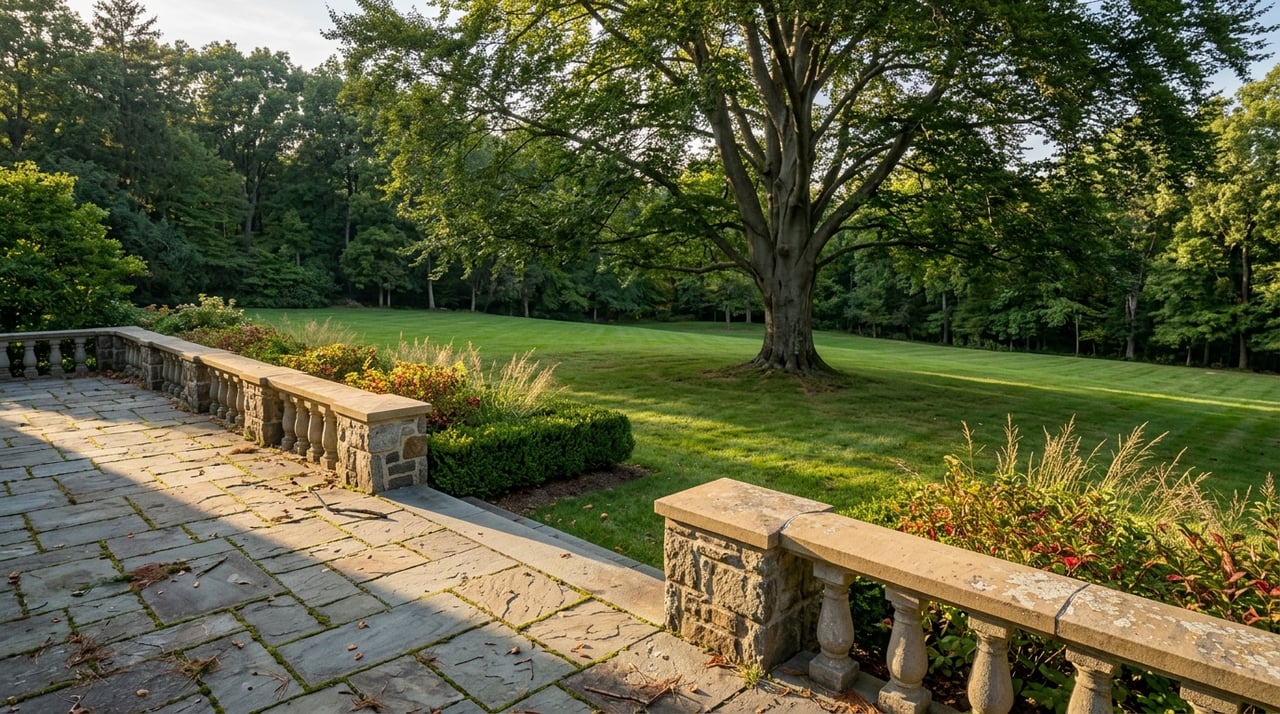
Ask anyone who has toured a handful of Inverness properties what they picture, and you will hear some version of the same answer: acre-plus lots, mature oak canopies, a septic tank buried somewhere behind the hydrangeas, and a well pump humming in the basement. That picture is accurate for most of the village. It is not accurate for all of it, and the gap between those two facts is exactly where buyers and sellers run into friction they did not see coming.
The Village of Inverness says it plainly on its own utility page: most homes here run on private wells and septic systems. But a specific set of subdivisions do not. Some get water and sewer from the Village of Palatine. Others get it from the Village of Barrington. If you are shopping, selling, or already living on one of those streets, your inspection scope, your closing timeline, and even your conversation with a lender look different from the well-and-septic default everyone assumes.
The Split You Won't See on a Listing Sheet
Here is the part that rarely makes it into a listing description or a buyer's mental map of the village. According to the Village of Inverness, residents in Inverness on the Ponds, the Shires of Inverness, Maison du Comte, Ashbury, and the Enclave get their water and sewer service from the Village of Palatine. Meanwhile, residents in Braymore Hills, Sanctuary II of Inverness, Glencrest III, Weatherstone, and the Estates at Inverness Ridge are served by the Village of Barrington instead.
| Subdivision | Utility Provider |
|---|---|
| Inverness on the Ponds | Village of Palatine |
| The Shires of Inverness | Village of Palatine |
| Maison du Comte | Village of Palatine |
| Ashbury | Village of Palatine |
| The Enclave | Village of Palatine |
| Braymore Hills | Village of Barrington |
| Sanctuary II of Inverness | Village of Barrington |
| Glencrest III | Village of Barrington |
| Weatherstone | Village of Barrington |
| Estates at Inverness Ridge | Village of Barrington |
Everywhere else in the village, the default is private well and septic. The Village of Barrington's own description of its service area confirms the mechanics on that side: water comes from an underground aquifer pumped and purified at four village wells, then distributed through a village-owned system of mains and lines, with wastewater treated at the village's own plant before discharge into the Flint Creek Tributary. That is a fundamentally different infrastructure relationship than a private well casing and a leach field on your own property line.
If you are touring homes across several of these subdivisions in the same week, the utility picture can change from one cul-de-sac to the next. It is a detail worth confirming before you ever schedule the tour.
Why Inverness Runs Its Own Rulebook
Most of Cook County routes septic approvals through the Cook County Department of Public Health. Inverness does not. Along with Barrington Hills, Palos Park, and South Barrington, Inverness maintains its own IDPH-approved septic ordinance, meaning the village itself reviews and approves private sewage disposal systems rather than deferring to the county.
That local control shows up in the fine print of the village code. Before anyone can build a new private sewage disposal system, plan approval has to come from the village, and the application has to be signed and submitted to the village's enforcement officer along with a scaled drawing certified by a licensed professional engineer. New or repaired systems also require a cash performance bond.
None of that is unusual for septic regulation in general. What is worth knowing is that Inverness handles it in-house rather than through the county, with its own Building Department and its own Permit Coordinator, Scott Smith, fielding the calls. The village's resident information page spells out the practical version: most home improvement projects require a permit, and septic systems, culverts, and certain landscaping projects are explicitly called out as needing one. If a septic repair surfaces during a home sale, plan for village review rather than county review.
What Shows Up at the Inspection Table
Illinois Extension says Illinois law requires a residential seller to certify whether they know of any problems with their on-site septic system. That certification is a starting point, not a guarantee. As University of Illinois Extension points out, what counts as a "problem" can look different from one homeowner to the next, which is exactly why a professional inspection matters more than the disclosure form alone. Extension's guidance for buyers is direct: start with the local health department, and expect that permit records will show the system's location, its age, tank and lateral field size, and any complaints filed against it.
For an Inverness property on well and septic, that inspection has real teeth. It touches groundwater quality, tank condition, and field capacity, and it can turn up costly surprises if the system is aging or was sized for a smaller home than what stands there now. For a property in one of the Palatine- or Barrington-served subdivisions, that entire line of inspection does not apply. The relevant scope shifts to a standard sewer lateral and municipal water line inspection instead, which is a faster, more familiar process for most buyers coming from elsewhere in Chicagoland.
Writing an inspection contingency without knowing which category applies means you are either paying for tests you do not need or skipping ones you do. Confirming utility type before you draft the offer saves both money and a week of back and forth once you are already under contract.
Planning for the Septic-Repair Timeline
The bond and permit structure described above is not just a compliance detail. It has a real effect on how long a septic-related repair takes to clear before closing. If an inspection turns up a failing system on a well-and-septic property, the fix has to go through the village's plan approval process, a professional engineer's certified drawing, and the performance bond requirement. A buyer and seller negotiating a septic repair credit or a pre-closing fix should plan for village review time, not assume it works like a standard plumbing repair.
Compare that to a home in Maison du Comte or Weatherstone, where a sewer or water line issue routes through Palatine or Barrington's existing municipal systems using processes those villages already run at scale for thousands of other properties. The repair conversation is usually shorter, because the infrastructure and the approval pathway both already exist off the property.
Reading the Market Through This Lens
Inverness listings tracked as of June 2026 showed a median list price near $1.19 million, with homes typically finding a buyer in about two weeks. That pace does not leave much room for research once a listing goes live. If you are shopping seriously, the smarter sequence is confirming utility type for the specific streets or subdivisions on your list before you start touring, not after you have already fallen for a house and are racing a two-week market clock to write an offer with the right contingencies attached.
For sellers, the same logic runs in reverse. If your home is on private well and septic, having a recent system inspection and permit history ready before you list removes one of the most common causes of a stalled contract. If you are in one of the municipally served subdivisions, that is worth stating clearly in your listing materials, since it answers a question a meaningful share of buyers are currently asking without realizing it applies differently street to street.
A Few Questions Worth Settling Early
How do I find out if a specific Inverness address is on well and septic or municipal service? The Village of Inverness utility page lists the subdivisions served by Palatine and by Barrington. Anywhere not on those lists defaults to private well and septic, and the village's Building Department can confirm specifics for an individual parcel.
What happens if a septic inspection turns up a problem during a sale? Repairs or replacements have to go through the village's plan approval process, which requires a professional engineer's certified drawing and a cash performance bond. Build that timeline into your contract expectations.
Does being on municipal water and sewer change how a home shows or appraises? It does not change the home's presentation, but it does change the inspection scope and the questions a buyer's lender or attorney may ask, which is worth addressing directly in your listing conversation rather than leaving a buyer to discover it mid-contract.
If you are weighing a purchase or a sale in Inverness and want a clear read on which utility rules apply to a specific address, the Tara Kelleher team can walk through the permit history, inspection scope, and timeline before you write or accept an offer. Get your home valuation and staging plan and start the conversation with the details that actually matter for your address, not just the village's general reputation.
This article is general information, not legal, tax or financial advice. Consult a qualified professional about your situation.