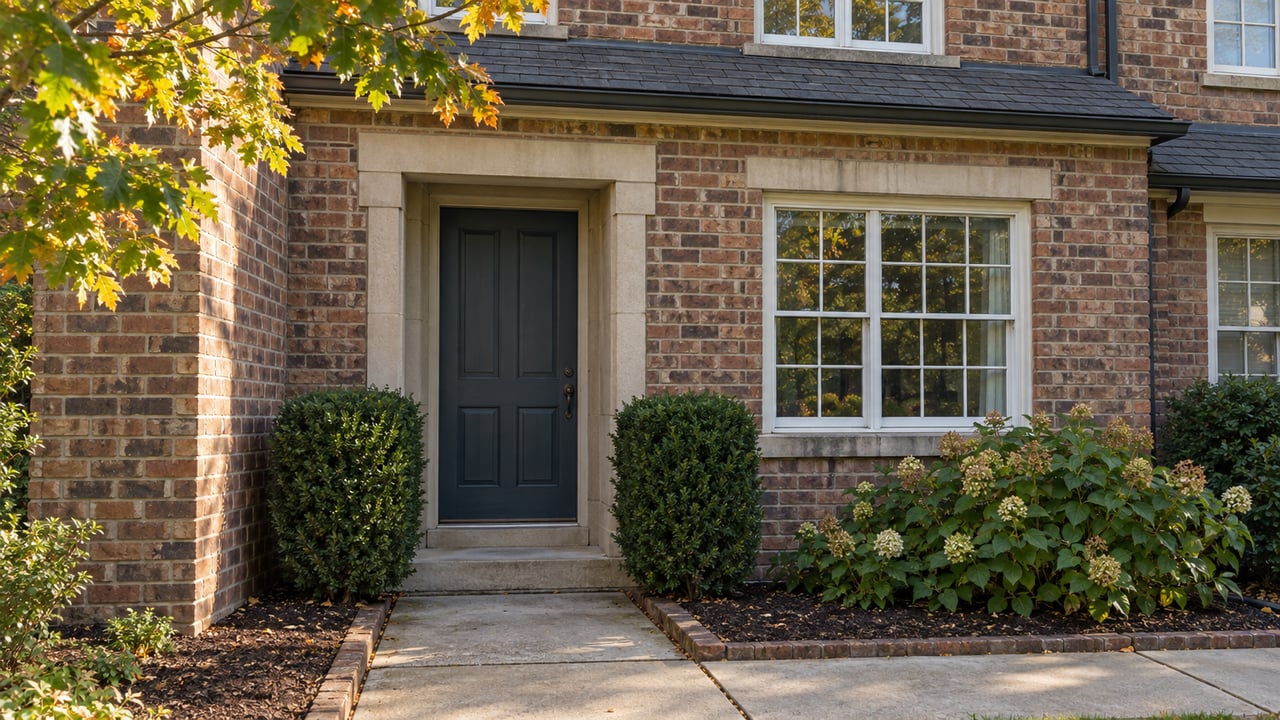
Two brick-and-stone traditionals sit three blocks apart in Barrington. Same era, same square footage, same $582,500 price tag if you squint at the comps. One owner writes a property tax check for roughly $11,000 a year. The other writes one for closer to $14,000. Nothing about the house explains the gap. The explanation is a county line neither buyer noticed on the listing sheet.
That's the number most people comparing a Chicago condo to a Barrington house get wrong before they've even toured a property. They assume the math is condo-fee-versus-house-tax, a straightforward swap of one carrying cost for another. It isn't. The two numbers behave differently, and understanding how is the difference between budgeting accurately and getting surprised twice, once at closing and again the following spring.
The Listing Sheet Doesn't Tell You Which County You're Buying Into
Barrington's village limits cross a boundary that has nothing to do with school ratings or curb appeal: the line between Cook County and Lake County. Appraisers who work the area regularly document what that means in dollars. On a home valued at $582,500, a Cook County parcel carries an effective tax rate around 1.89 percent, while a Lake County parcel in the same neighborhood runs closer to 2.43 percent. That's a gap of more than $3,100 a year on an identical house, driven entirely by which side of an invisible line the parcel happens to sit on.
Property tax trackers looking at village-wide medians land in a similar range. Barrington's Cook County side shows a median effective rate near 1.94 percent, against roughly 2.37 percent on the Lake County side. The exact decimal moves depending on who's measuring and which subdivision's school and park district levies are stacked on top, but the direction and the size of the gap hold steady across sources.
A buyer comparing two Barrington listings on price alone is comparing two different tax systems without knowing it.
Here's the part that trips people up further: this isn't a one-town quirk. Barrington Hills, just next door, actually touches four counties, Cook, Kane, Lake, and McHenry, each with its own assessor, its own equalization factor, and its own appeal deadline. The Barrington area was built across old township lines, not around them, and the tax map still shows it.
| Cook County side | Lake County side | |
|---|---|---|
| Effective tax rate (village-level median) | ~1.89% to 1.94% | ~2.37% to 2.43% |
| Annual bill on a $582,500 home | ~$11,000 | ~$14,000 |
| Assessment basis | 10% of market value | 33.33% of market value |
| Appeals body | Cook County Board of Review | Lake County Board of Review |
Why the Assessment Ratio Doesn't Predict the Outcome
It would be reasonable to guess that Cook County, which assesses residential property at just 10 percent of market value, would always come out cheaper than a county assessing at the full one-third standard used almost everywhere else in Illinois. That guess is wrong often enough to matter. The assessment ratio only sets the base the rate multiplies against. What actually lands on the bill is that ratio combined with every overlapping levy, school district, park district, library, fire protection, layered on top. Lake County's overlapping levies push its effective rate high enough to erase Cook's lower assessment ratio and then some. The two counties aren't running the same math with different inputs. They're running genuinely different systems that happen to produce bills on the same kind of house in the same village.
There's a second wrinkle worth knowing if you're buying soon. The Cook County Assessor released new reassessment values for Barrington Township in July 2025, with an appeal window that closed that August, and those figures are the ones now showing up on 2026 second-installment tax bills. The same release noted that the median sale price for single-family homes in Barrington Township in 2024 was $734,000, while the assessor's own market value estimate for that same property class came in higher, at $803,000. When the assessed value runs ahead of what homes are actually selling for, that's the kind of gap a new owner can point to in a future appeal, not something to accept as fixed.
Meanwhile, Back in Chicago, the HOA Fee Is Only the Opening Bid
The number a Chicago condo buyer sees on a listing is the monthly assessment, often somewhere in the $300 to $450 range for a mid-rise or courtyard building, higher for full-amenity high-rises. That number is real, but it's rarely the ceiling. Illinois attorneys who track condo association finances describe a pattern playing out across the city: boards that kept dues artificially low for years are now facing repair bills they can no longer defer, and the fix arrives as a special assessment rather than a gradual increase. Those charges aren't hypothetical line items. They're the difference between what a unit owner budgeted for and what actually shows up in the mail.
Layer Cook County's own reassessment cycle on top of that and the picture gets more complicated, not less. Condo owners in older buildings have seen their property tax portion jump sharply in recent reassessment years, on top of whatever the association itself is charging. A buyer weighing a Chicago unit against a Barrington house isn't just comparing a monthly fee to an annual tax bill. They're comparing a number that's fixed by a public formula against a number that's set by a volunteer board managing a building's hidden maintenance backlog, and that second number can move a lot faster.
Two Kinds of Risk, Not One Kind of Price
This is the actual comparison worth making, and it isn't the one most cost-of-living guides walk through. A Barrington tax bill is a locational risk. It's tied to a specific parcel, it's published, it's appealable on a known schedule, and it can be checked before you ever write an offer. A Chicago condo fee is a collective risk. It's tied to a building's reserve fund and a board's history of decisions you weren't in the room for, and much of it stays invisible until you're already reviewing meeting minutes as a buyer under contract.
Neither risk is worse than the other. They're just different in kind, and a buyer who treats them as the same line item on a spreadsheet is going to be wrong about one of them.
Before You Write an Offer
A short list worth working through with your agent on either side of this comparison:
- Pull the parcel's county of record before you tour, not after you've fallen for the house. Cook and Lake County both maintain public assessor lookup tools by address or PIN.
- Ask when the property was last reassessed and whether an appeal is pending. Barrington Township's most recent reassessment values are already reflected in 2026 tax bills.
- For a Chicago condo, request the last 12 months of board meeting minutes and the current reserve fund balance before you're deep into a contract, not after.
- Ask directly whether any special assessment has been discussed, voted on, or is anticipated, even informally, in board communications.
- Compare the effective rate, tax bill divided by market value, rather than the posted mill rate. The posted rate alone won't tell you what the assessment ratio does to it.
A Few Questions Worth Settling Early
Does a lower tax rate always mean a better deal? Not automatically. A lower effective rate can also reflect a smaller local levy for parks, libraries, or fire protection. The point of comparing Cook and Lake County rates isn't to declare one cheaper across the board. It's to know which system you're buying into before the bill arrives.
How do I find out which county a specific Barrington address sits in? The street address alone won't tell you. Your agent can pull the parcel identification number, and both the Cook County Assessor and the Lake County Assessment Office maintain public lookup tools by address.
Is this Cook-Lake split unique to Barrington village? No, and it actually gets more complicated next door. Barrington Hills touches four counties, Cook, Kane, Lake, and McHenry, each running its own assessment and appeal calendar. The pattern in Barrington proper is the simpler version of a wider quirk in how this area's township lines were originally drawn.
If you're weighing a move from a Chicago condo into a Barrington house, the two costs you're comparing were never built the same way, and a valuation built on assumptions from one system won't hold up in the other. The Tara Kelleher Team can walk you through exactly which side of Barrington's tax lines a specific listing sits on before you write an offer, and what that means for your real carrying cost once you close. Get your home valuation and staging plan to start the comparison with real numbers instead of guesses.